 interact
Always-On Intelligence
Artificial intelligence needs to be always-on.
Turn-based models only exist when prompted. Their perception freezes in between, forcing users to fill in the gaps at every turn with lossy reconstructions. We believe that models should instead have a continuous perception of the real world.
AI should sit in on discussions, assimilating the tacit knowledge of the people around it. And it should ensure that these people have a complete understanding of what’s going on, keeping humans involved in building the future.
At companies, many tasks can’t be automated yet because the way they are done does not exist in any written form. This includes actuaries sitting down and deciding whether to insure a company, and this includes venture capitalists in the IC room, choosing to invest or pass.
But this is true in more than just a boring, knowledge-work way. As AI becomes better at long-horizon decision making, we will need to use AI for our most important decisions, from pandemic response to military strategy.
We need intelligence that lives in the room where these decisions are made. An always-on model captures not just the stated preferences of the people it hears, but more importantly, their revealed preferences as well. For models to make good decisions, they must understand the people they’re helping. At every company, in every boardroom, we need a coordinated effort to teach our AI systems how we make decisions.
Similarly, we need an intelligence that keeps us involved. In a world of agents finding blowups in Navier-Stokes and proving theorems in quantum cryptography, it’s harder than ever for us to keep up. Just as Amodei anticipates a country of geniuses in a datacenter, we envision a university of superhuman professors, created to guide us through these breakthroughs.
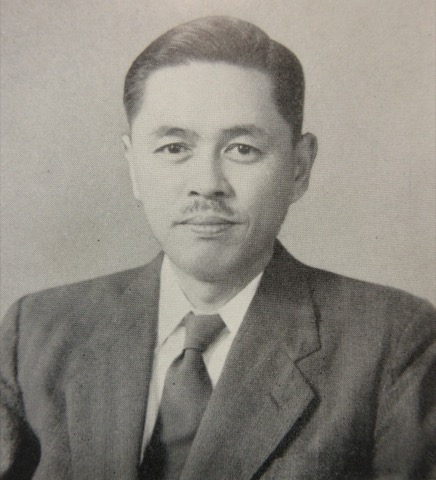
Toyota company history, 1958

Taiichi Ohno, father of the Toyota production line, pioneered a system. It’s called genchi genbutsu, meaning “go and see for yourself.” He realized that the most important insights were slipping through the cracks, lost in the narrow channel of reports sent from factory workers on the ground to their managers perched above Tokyo.
Turn-based text models have the same narrow channel built into their architecture. You send discrete prompts to a model, and the model sends occasional, bloated status reports back. Current speech models are an improvement, but they break down outside the bounds of self-contained, one-on-one conversations.
You need intelligence that can help you genchi genbutsu. It should tap you on the shoulder when it needs your attention, it should ask you the right questions, and it should tell you when you’re wrong. Today, the most important thing we can do is broaden the channels through which AI learns about us, and through which we learn from AI.
Our first release is a full-duplex speech model. It is remarkably human, and it’s the first model that can act like a real person in a group conversation. Always-on intelligence needs to know when to listen, when to contribute, and when to act. Our model makes this possible.
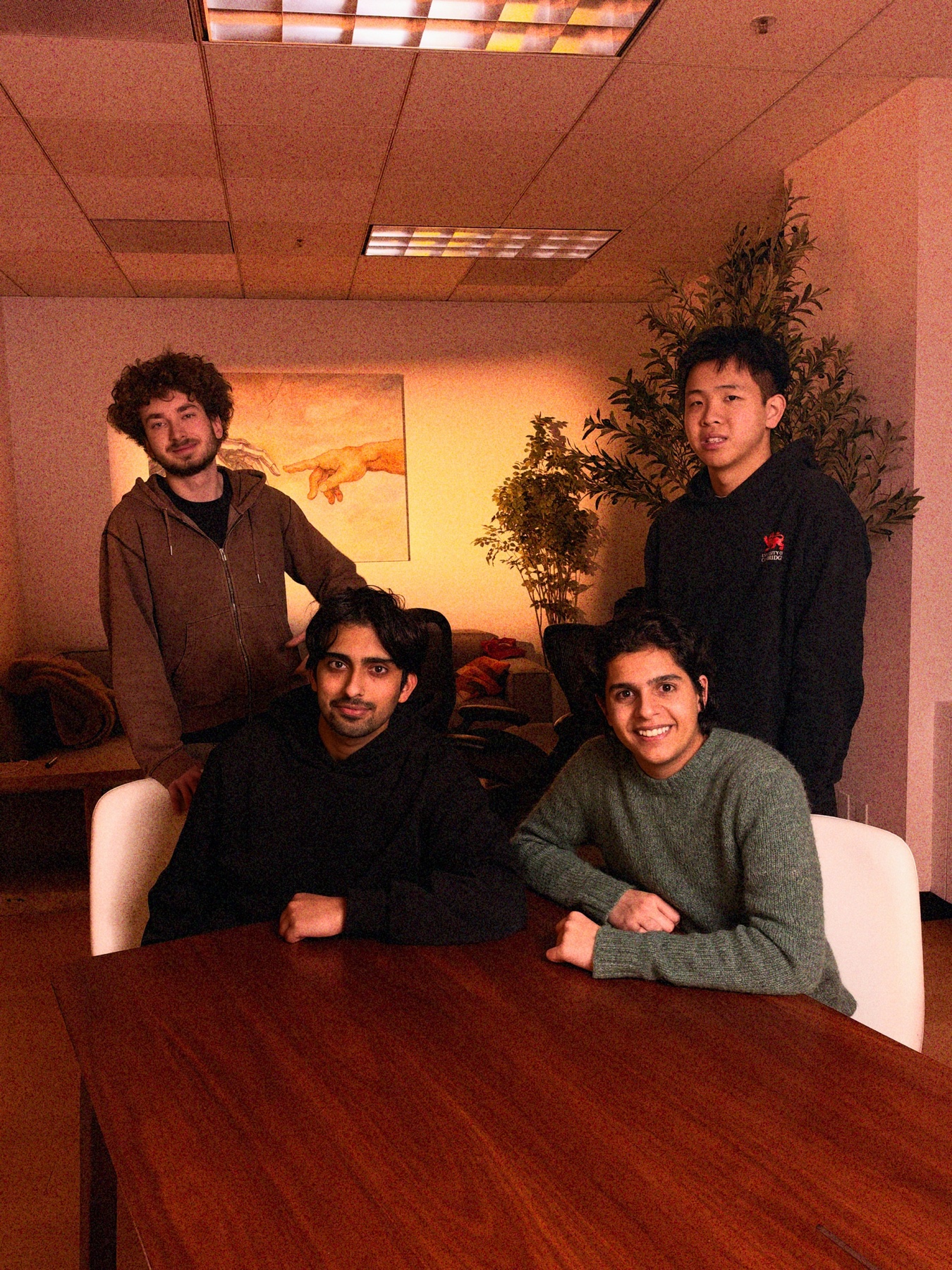
Internally, we have our always-on model running on our own hardware. It lives in our conference room, building an increasingly detailed understanding of how we get things done. Its value compounds rapidly as it grows to understand us with greater depth.

Our next release will be an order of magnitude larger, and will incorporate vision as well. If this mission resonates with you, please reach out to join@interact.inc. We are a team of six in San Francisco and have both the will and means to achieve this singular goal.